The Evolution of Backpack Design: From Military Roots to Modern Everyday Carry

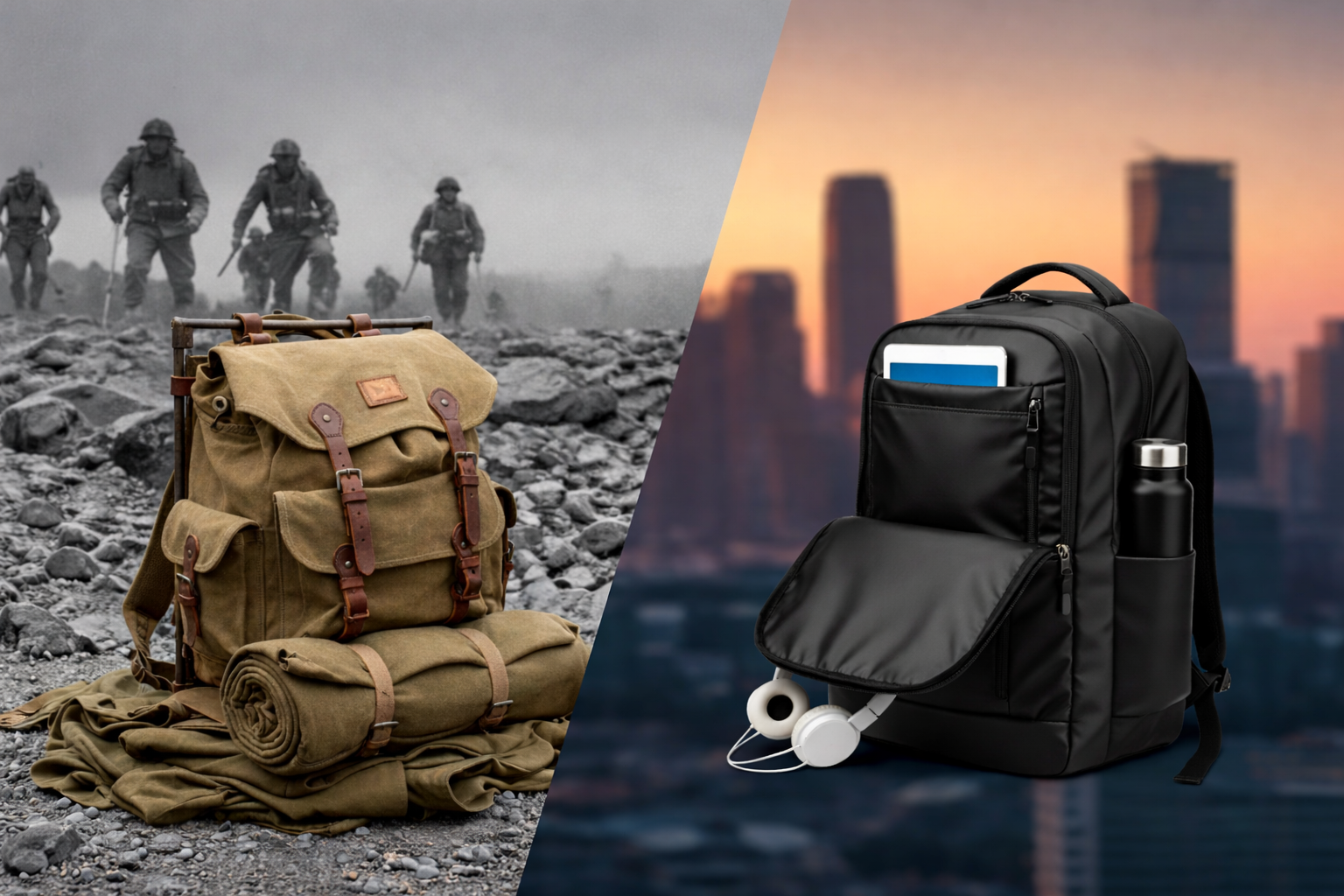
Backpacks have come a long way from their rugged military origins. What started as simple gear for soldiers has evolved into sophisticated everyday essentials that blend comfort, tech, and style. In 2026, the modern backpack is a true companion for work, travel, and adventure—reflecting how our lives have changed. Personal reflection: My first “real” backpack was a hand-me-down military surplus rucksack from the 90s—heavy canvas, no padding, but indestructible. It got me through college hikes and moves. Today, my sleek laptop pack with charging ports feels like a luxury upgrade, yet I still appreciate those tough roots. Let’s trace the key milestones in backpack evolution and see how they’ve shaped what we carry today.
Early Days: Military Necessity Drives Innovation
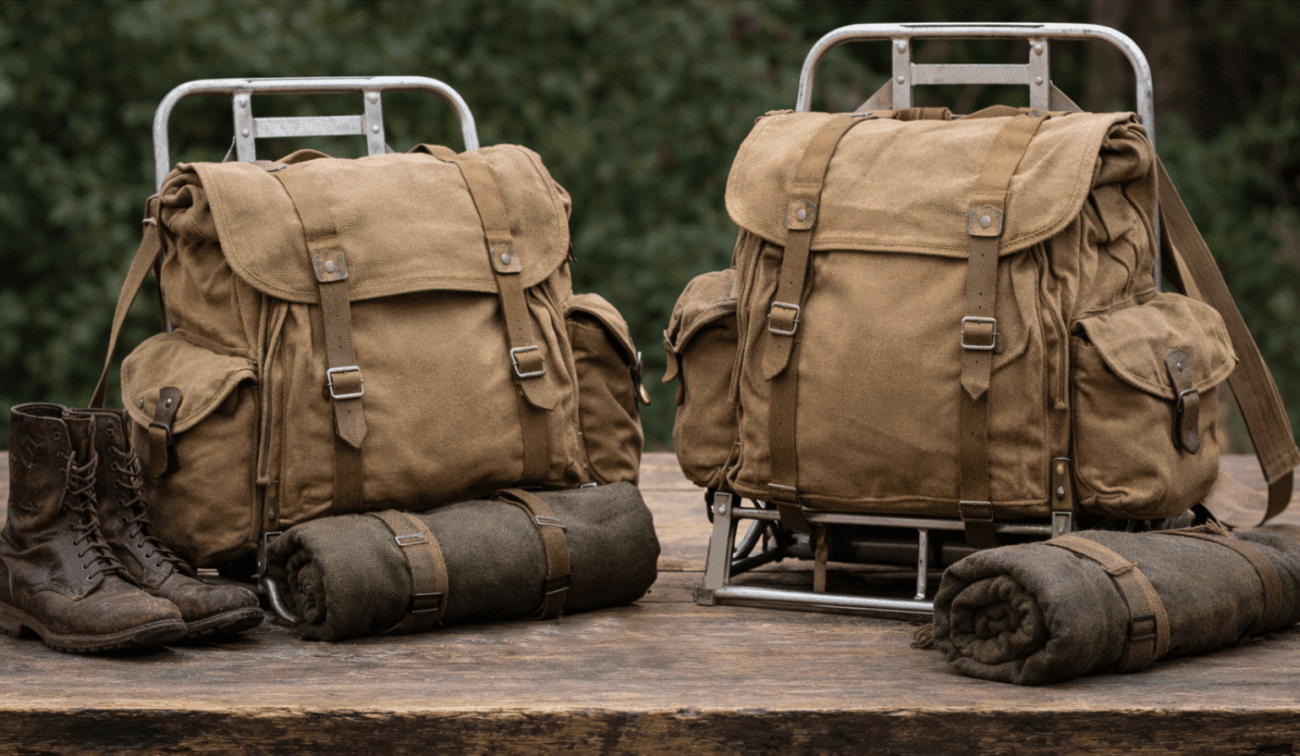
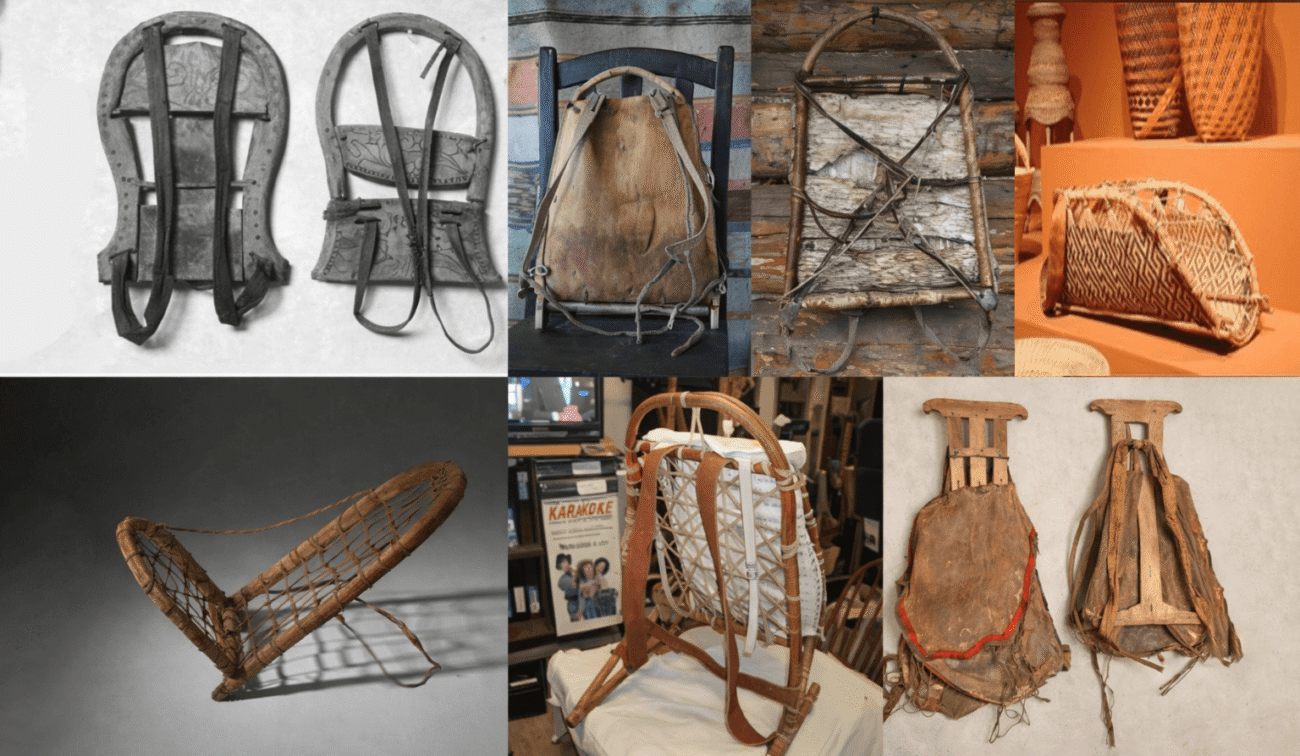
Backpacks trace back centuries, but modern designs took shape in the military.
- Pre-WWII Haversacks & Rucksacks: Basic canvas bags with minimal straps—functional but harsh on the body during long marches.
- WWII Era Advances: Introduction of framed packs for better load distribution, like the U.S. Army’s mountain rucksacks with detachable frames.
These designs prioritized durability and capacity over comfort—soldiers needed to haul heavy gear reliably.
The Outdoor Revolution: 1960s–1980s
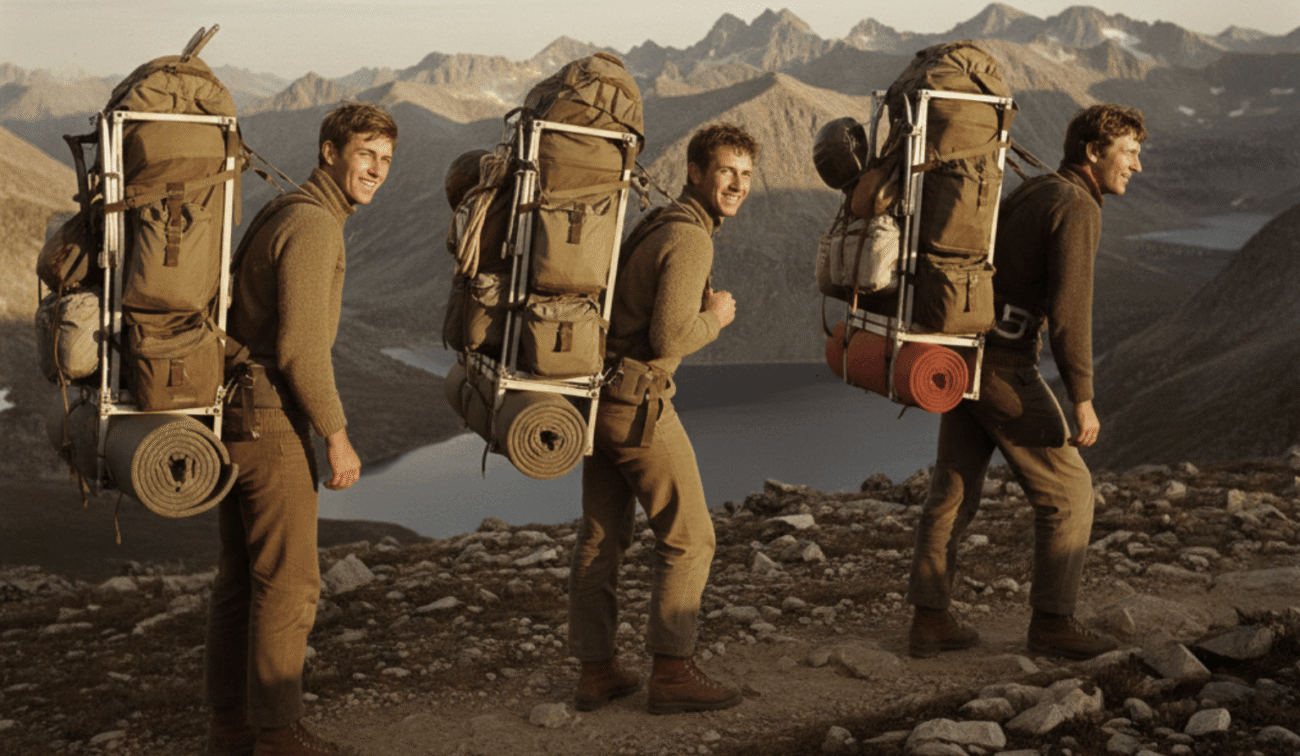
Civilian hikers and climbers pushed for improvements.
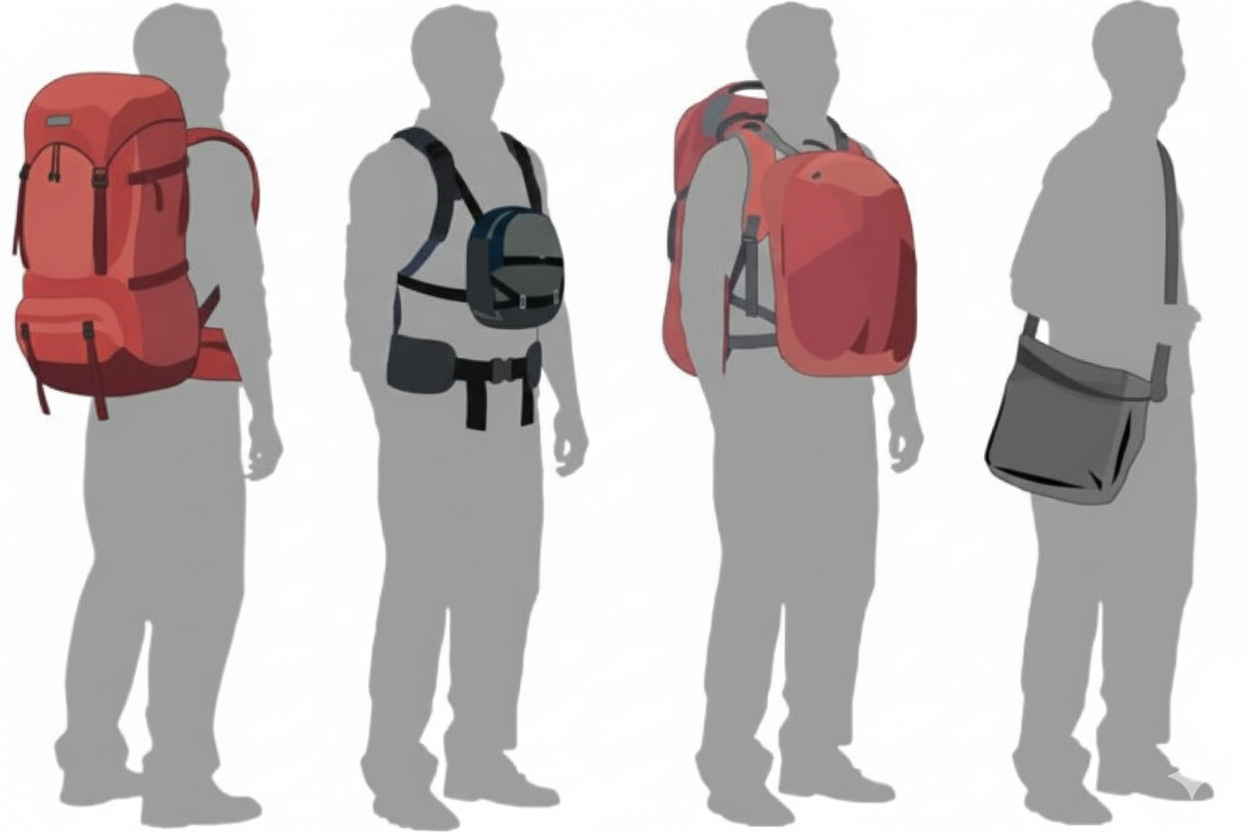
- External Frame Packs (e.g., Kelty): Aluminum frames kept loads away from the back for ventilation and heavy hauling—perfect for multi-day treks.
- Internal Frame Shift: By the 1980s, flexible internal stays allowed packs to contour to the body, improving balance for uneven terrain.
Brands like Gregory and Osprey led this era, making backpacks more accessible for outdoor enthusiasts.
2. Urban & Tech Integration: 1990s–Present
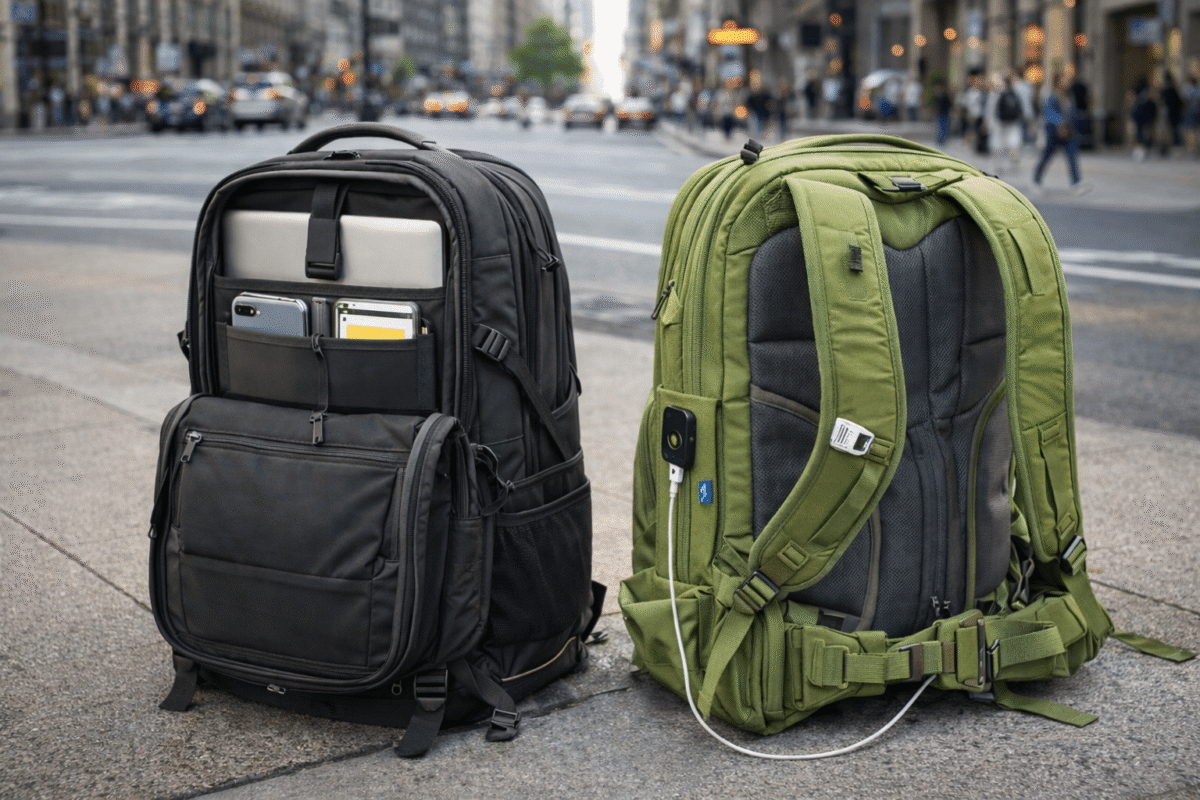
As laptops and commuting boomed, backpacks went mainstream.
- Padded Laptop Sleeves & Organization: Dedicated compartments became standard.
- Ergonomic Focus: Wider, contoured straps, breathable back panels, and hip belts for all-day comfort.
- Smart Features: USB charging ports, RFID-blocking pockets, and sustainable materials.
Today’s everyday carry (EDC) backpacks are lighter, weather-resistant, and modular—designed for city life as much as trails.
What’s Next: The Future of Backpacks
We’re seeing hints of solar panels, built-in trackers, and even smarter ergonomics with adjustable AI-assisted fits. But the core remains: reliable carrying that adapts to us.
Timeline Highlights
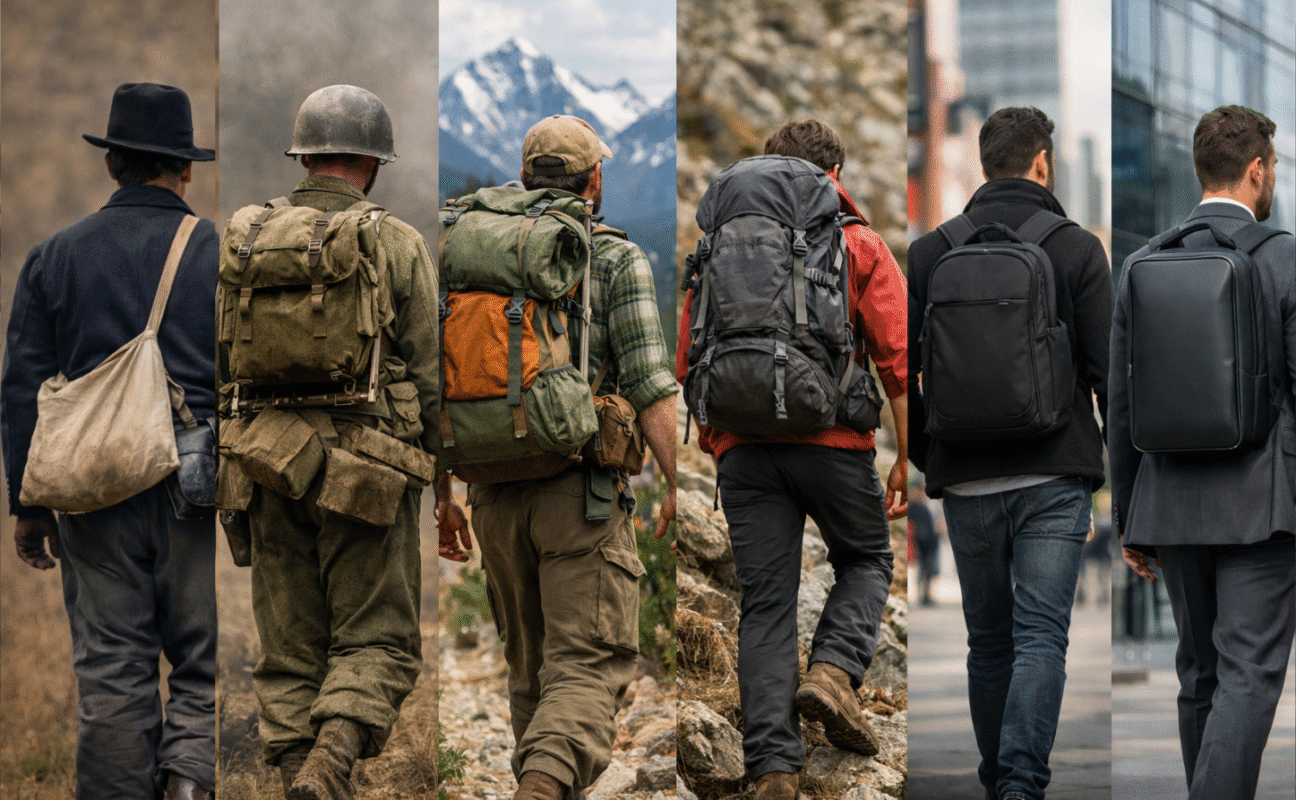
| Era | Design Milestone | Context & Impact |
|---|---|---|
| 1800s – Early 1900s | Military knapsacks & haversacks | Heavy canvas bags with simple straps, built for durability rather than comfort—effective but punishing on long marches. |
| 1930s – 1940s (WWII) | Framed military rucksacks | Detachable frames and improved load distribution reduced strain, setting the foundation for modern backpack engineering. |
| 1960s – 1970s | External frame packs (Kelty era) | Aluminum frames improved airflow and load support, fueling the rise of recreational hiking and backpacking. |
| 1980s | Internal frame backpacks | Flexible internal stays hugged the body, enhancing balance and mobility on uneven terrain. |
| 1990s – 2000s | Urban & commuter backpacks | Laptop sleeves, streamlined shapes, and organization systems reflected the shift toward daily city use. |
| 2010s – Present | Tech-forward & ergonomic designs | USB charging, smart organization, sustainable materials, and comfort-driven ergonomics define modern everyday carry. |
Conclusion: From Battlefield to Daily Commute
The backpack’s journey mirrors our own—starting with pure utility and evolving into something personal and indispensable. Whether you’re drawn to vintage military vibes or cutting-edge tech, there’s a design rooted in this rich history.
What’s your favorite backpack era or feature? Military tough? Minimalist modern? Share in the comments—I’d love to hear your stories!